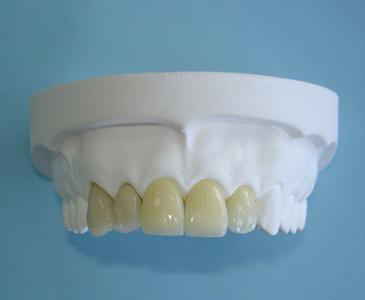
Retention is more important. Poor retention can lead to many problems, such as secondary caries of the abutment teeth, and damage to the periodontal tissue, which can not play a good chewing function or even swallow it by mistake.
Types of Retainers: Intracoronal Retainers, Extracoronal Retainers, and Intraroot Retainers
Improve the retention force of the retainer: Since the fixed denture connects each abutment as a whole, its stress response is different from that of a single tooth, and the retention force is required to be higher than that of individual teeth.
(1) The retention force of the full crown is the best, and the occlusal convergence should not be too large when the retainer is used. 3/4 crowns should be done with adjacent axial grooves to prevent rotational dislocation. The point and line angles of the inlay are clear.
(2) The design of the retention force of the retainer is adapted to the size of the occlusal force, the span of the bridge and the curvature of the bridge. The longer the span of the bridge, the more curved, and the greater the occlusal force, the higher the retention force of the retainer is required.
(3) The retention force of the abutment retainers at both ends of the double-ended fixed bridge should be basically equal: if the retention force of the retainers at both ends is very different, the retainer at the end with the difference in retention force is easy to loosen. The retainer at the end with strong retention force did not fall off temporarily, and the patient was not easily aware of it, resulting in secondary caries of the loose end abutment.
(4) When selecting the retainer, it must be considered that there should be a common seating channel between each retainer.
(5) If the abutment is defective or deformed, it should be repaired together when designing the retainer. If the abutment crown has a filling, the edge of the retainer should cover the filling as much as possible, so as to prevent the filling from loosening and affecting the retention of the retainer.
(6) The design of the retainer should prevent the cusp fracture of the abutment tooth, and the extra-coronal retainer will not cause cusp fracture because the occlusal surface of the abutment tooth is completely covered by metal. Intra-coronal retainers, especially if the maxillary bicuspids are adjacent occlusal inlays, are prone to cusp fracture due to their steep cheeks and tongue tips.
(7) Retainer design for teeth with severe crown defects: Most of these teeth are dead pulp teeth. As long as the defect does not reach the subgingival, the teeth are stable and should be retained as much as possible. First of all, after thorough root canal treatment, insert and fix retention nails or posts in the root canal, use amalgam or resin to form a nucleus, and then make a full crown retainer.
(8) Retainer design of inclined abutment: First, the axial direction of the abutment can be changed by orthodontic means; secondly, the modified 3/4 crown can be used for retention;
发表回复